
Every lot at a Belpearl auction is described by the four characteristics that decide the value of a South Sea pearl — colour, surface, size and shape — using the codes on this page. They are the same codes you will find on our lot sheets and in the catalogues.
South Sea pearls are grouped into four body colours, each with its characteristic overtones. Auction prices are quoted for medium colour within each group; lighter and mixed-colour lots are adjusted by a percentage.

Surface is graded by the number and visibility of blemishes on the pearl's skin, from 1 (clean) to 5 (heavily blemished). Grade 3+ sits between 2 and 3 and marks pearls whose blemishes are slight and easily hidden in a piece of jewellery.

Size is measured in millimetres and grouped into four ranges. Lots are catalogued with their size range, with 1st Graff (8, 9 and 10 mm) and 2nd Graff (11 and 12 mm) the most common at auction. Larger pearls of fine quality are rare, and their price rises steeply with size.

Shape follows the pearl's outline and symmetry. Round and semi-round pearls command the highest prices; drops, buttons and baroques each have their own market; circles carry the concentric grooves typical of many Tahitian pearls; keshi are the small non-nucleated pearls sold by weight.
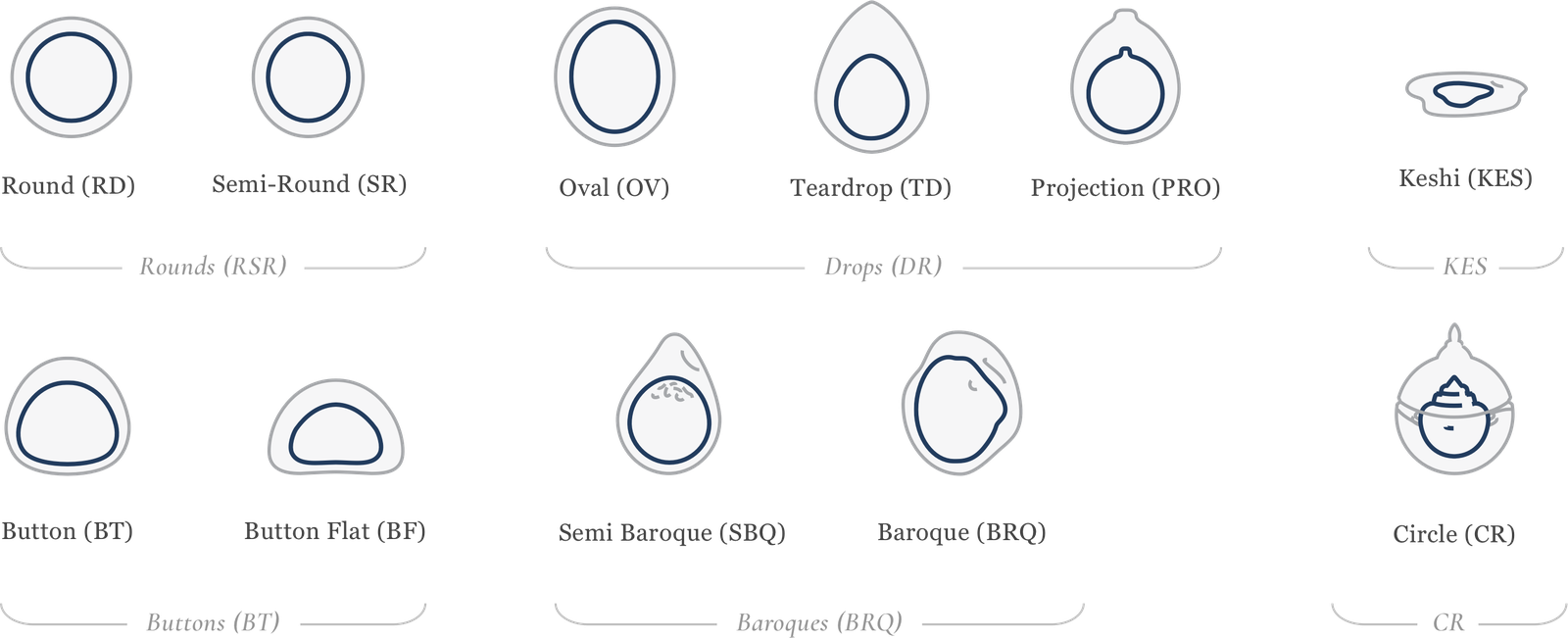
Each lot in a Belpearl catalogue carries the same set of facts, so lots can be compared at a glance and traced back to their producer.